
". . .You can form no idea of the perplexity of my situation. No man, I believe, ever had a greater choice of difficulties, and less means to extricate himself from them.”
George Washington
December 18, 1776, in a letter to his brother

America 250 Quilt: A Tribute to the Men & Women Whose Courage Created this Great Country
Washington Crossing the Delaware - The Quilt
The Painting
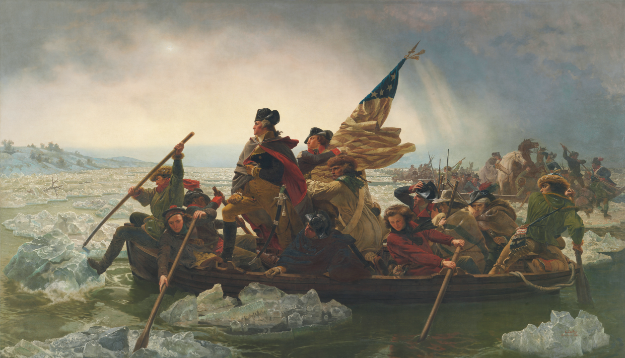
Emanuel Leutze
The Quilt
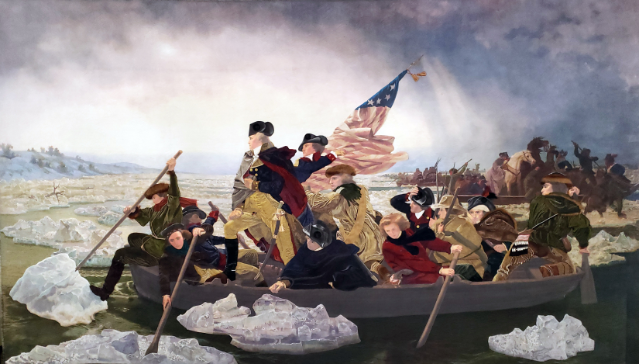
Nancy Prince
Celebrating the USA 250th Anniversary through Textile Art
The Making of Washington Crossing the Delaware: A Creative Adventure I Never Saw Coming
In 2020, I completed a quilted reproduction of John Trumbull’s iconic Declaration of Independence — the monumental painting that hangs in the Capitol Rotunda. The final weeks of that project were a blur of exhilaration, exhaustion, frustration, and triumph, all wrapped into one enormous creative marathon. When I finally made the last stitch, I made myself a solemn promise: Never again would I take on a project of that magnitude.
That promise lasted exactly one week.
Because, of course, the image of Emanuel Leutze’s Washington Crossing the Delaware had been quietly pacing around in the back of my mind for years. And what harm could a little research do? Just a quick peek, I told myself. That was my first mistake — and one of the best mistakes I’ve ever made.
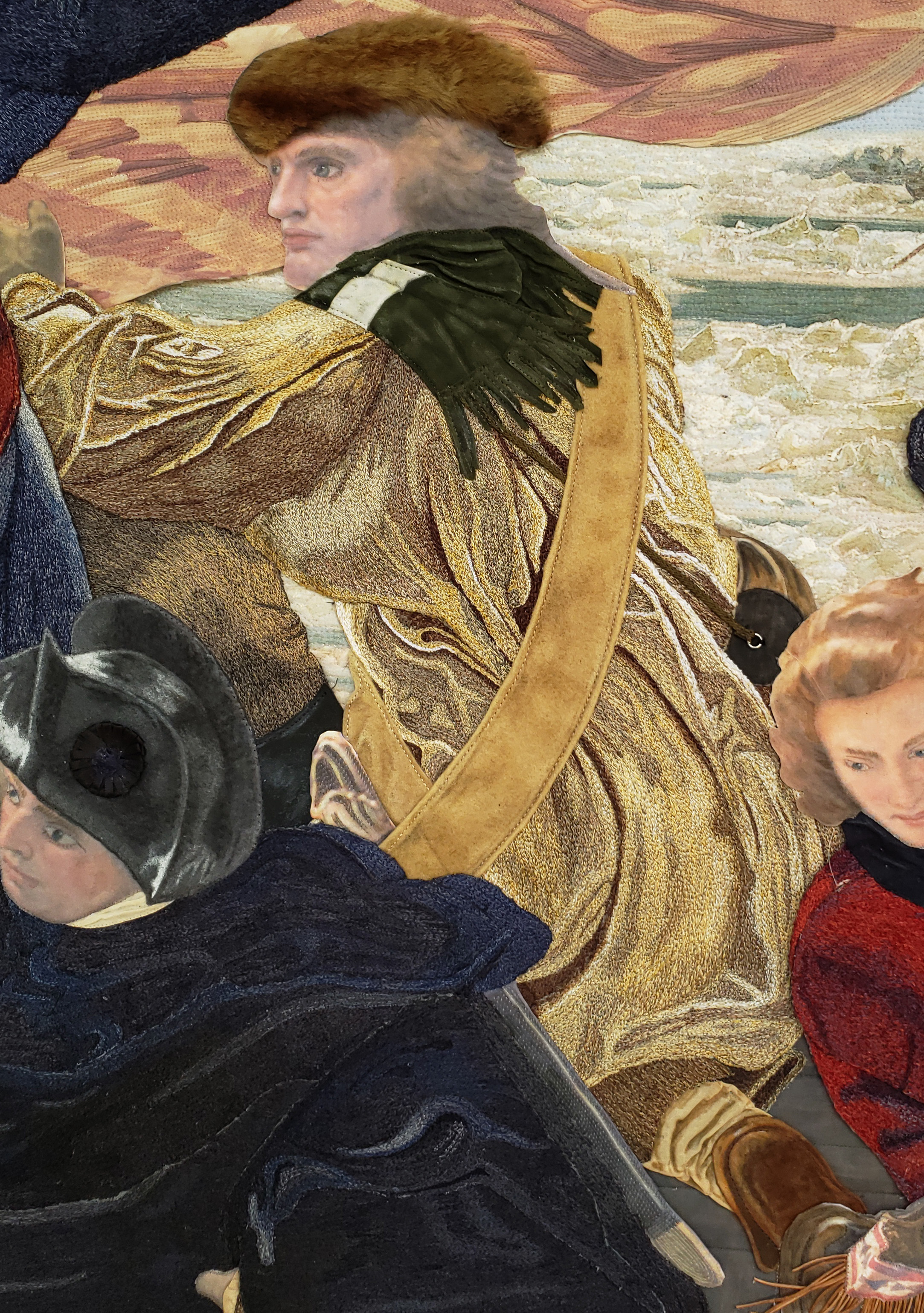 The more I studied the painting, the more I was hooked. Every figure, every shading, creating the look of the folds of thread, every expression revealed new possibilities. And after all, there were only twelve men in the boat. I had just finished a quilt with forty seven men in it. So really… how hard could this be?
Famous last words.
Falling Down the Historical Rabbit Hole
Like any good research adventure, mine began with a week of deep dives, conflicting accounts, and fascinating discoveries. Leutze’s painting is one of the most recognizable images in American art — a dramatic, emotional tribute to Washington’s daring 1776 Christmas night crossing during the Revolutionary War. What makes the painting so enduring is not just its historical subject, but the way Leutze captured the raw determination and fragile hope of a young nation fighting for its future.
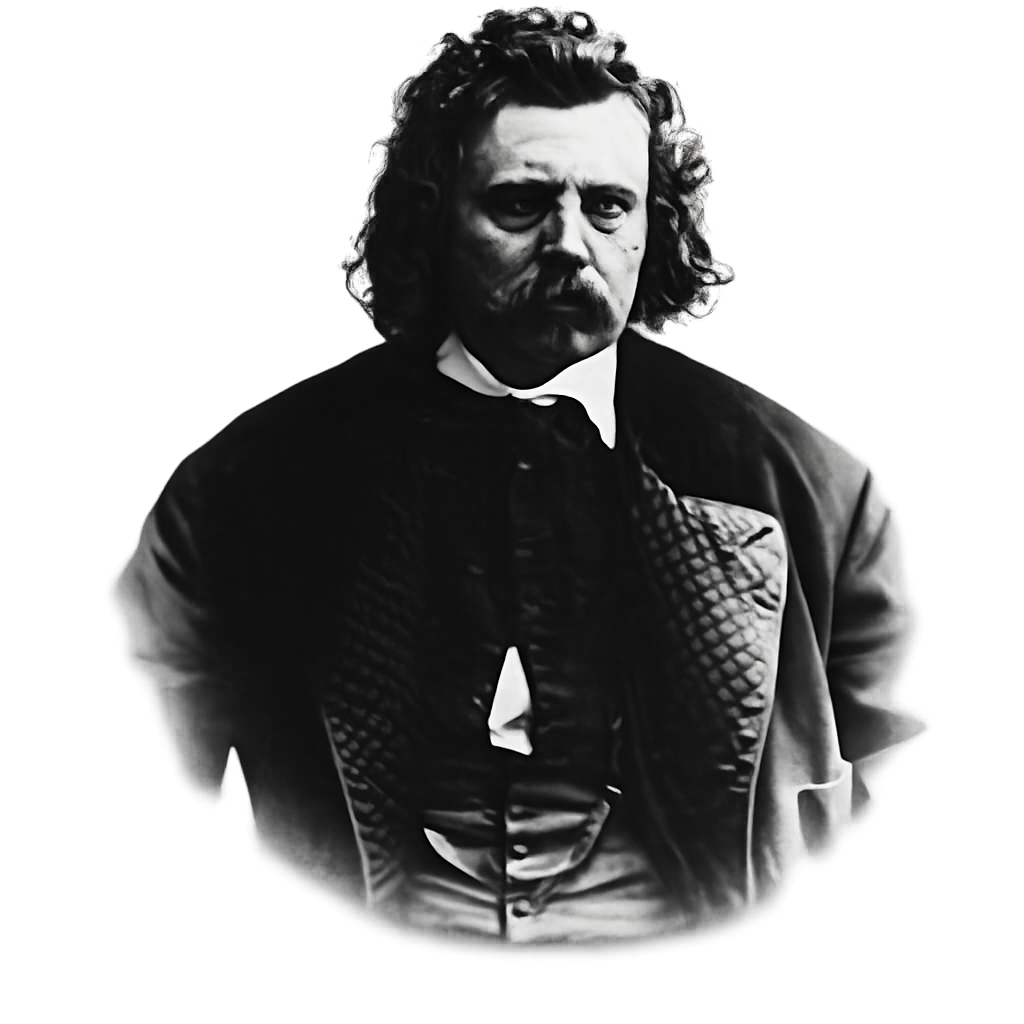 Leutze himself had a remarkable story. Born in Germany, he immigrated with his family to Philadelphia in 1825. His talent was quickly recognized, and after returning to Germany, he enrolled at the Düsseldorf Academy in 1841. Influenced by European Romanticism and inspired by the rising spirit of American nationalism, he set out in 1849 to paint a scene that would embody American resolve, liberty, and courage.
A Painting With a Life of Its Own
What many people don’t realize is that Leutze painted several versions of Washington Crossing the Delaware — each with its own dramatic history:
- Painting 1 (1849–1850): Nearly finished when it was damaged in a fire. Restored, displayed in Bremen, Germany, and ultimately destroyed in a bombing raid during World War II on September 5, 1942.
- Painting 2 (1851): A full size version shipped to America, purchased in 1897 for $16,000, and later donated to the Metropolitan Museum of Art, where it resides today.
- Reproduction (1969): Created with permission from the Met Museum.
- Painting 3: A smaller 3' × 6' version that hung in the West Wing of the White House from the 1970s until 2014. After being returned to its owner, it was auctioned by Christie’s in 2022 — selling for double its high estimate at an astonishing $45 million.
With a story like that, how could I not be inspired?
The Inaccuracies Shaped the Painting
Once I decided to recreate Emanuel Leutze’s Washington Crossing the Delaware as a quilt, I quickly discovered that stepping into his world meant stepping into a fascinating mix of fact, fiction, and full blown artistic drama. Leutze’s painting is one of the most recognizable images in American art — a soaring tribute to courage, leadership, and the grit of a young nation. But as I dug deeper, I learned something delightful: this famous painting is also one of the most historically inaccurate masterpieces ever created.
And honestly? That made it even more fun to translate into thread and fabric.
A Stormy Night… or a Glorious Sunrise?
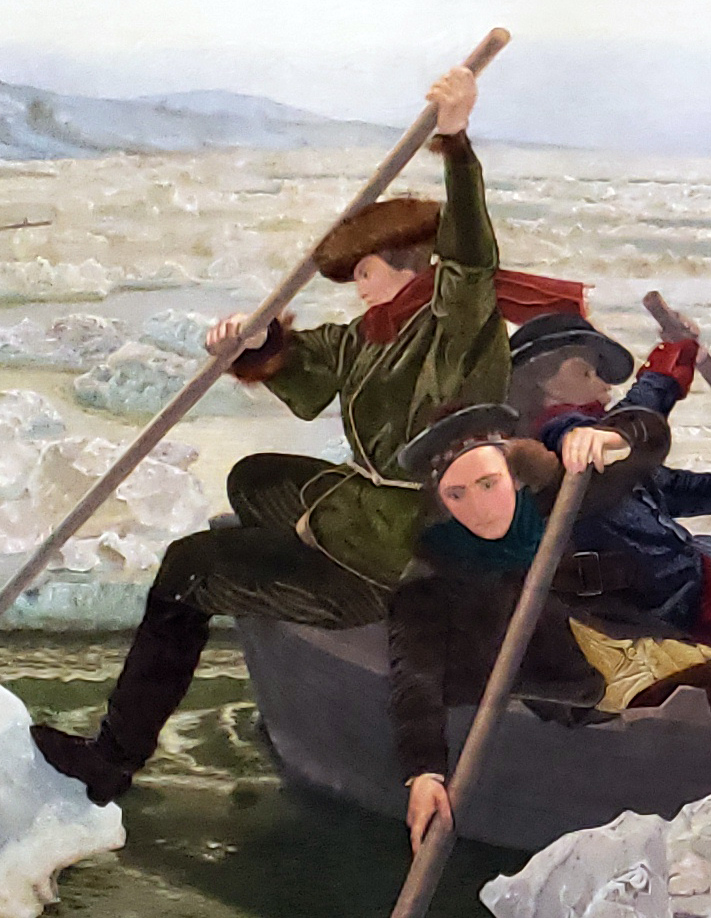
Leutze painted the crossing as a heroic, almost serene moment at daybreak, complete with dramatic lighting and beautifully arranged ice floes. In reality, Washington and his troops crossed the Delaware River in the dead of night during a brutal winter storm. Think freezing temperatures, howling winds, snow, sleet, and ice that threatened to crush the boats — not exactly the kind of weather that inspires a picturesque sunrise.
But Leutze wasn’t aiming for meteorological accuracy. He wanted emotion, symbolism, and a scene that would stir the soul. And he succeeded.
Washington: Heroic Pose, Questionable Balance
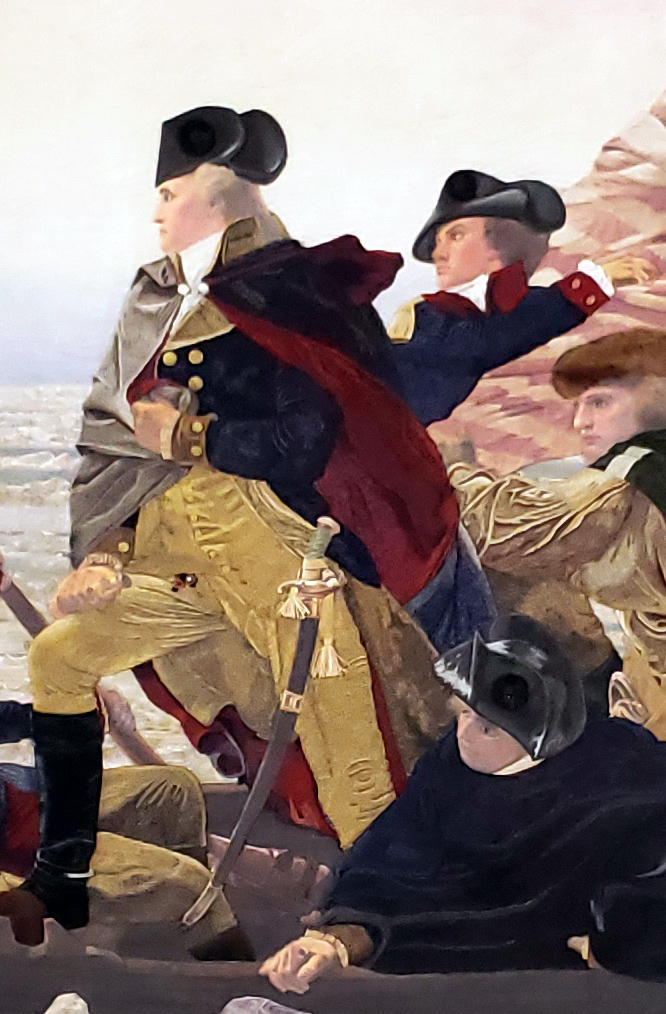
One of the most iconic elements of the painting is Washington standing tall at the bow of the boat, coat billowing, gaze fixed on destiny. It’s a breathtaking image… and also completely impractical.
Under real conditions — icy water, shifting ice chunks, and a boat full of exhausted soldiers — standing like that would have been dangerous, if not impossible. Washington also appears in a spotless uniform, which is a lovely artistic choice but not exactly reflective of the mud soaked, storm battered reality of the night.
Still, that heroic stance is part of what makes the painting unforgettable. And yes, it was a joy (and a challenge!) to recreate in thread.
A Symbolic Crew, Not a Historical One
Leutze filled the boat with a beautifully diverse group of figures: African Americans, Native Americans, and men of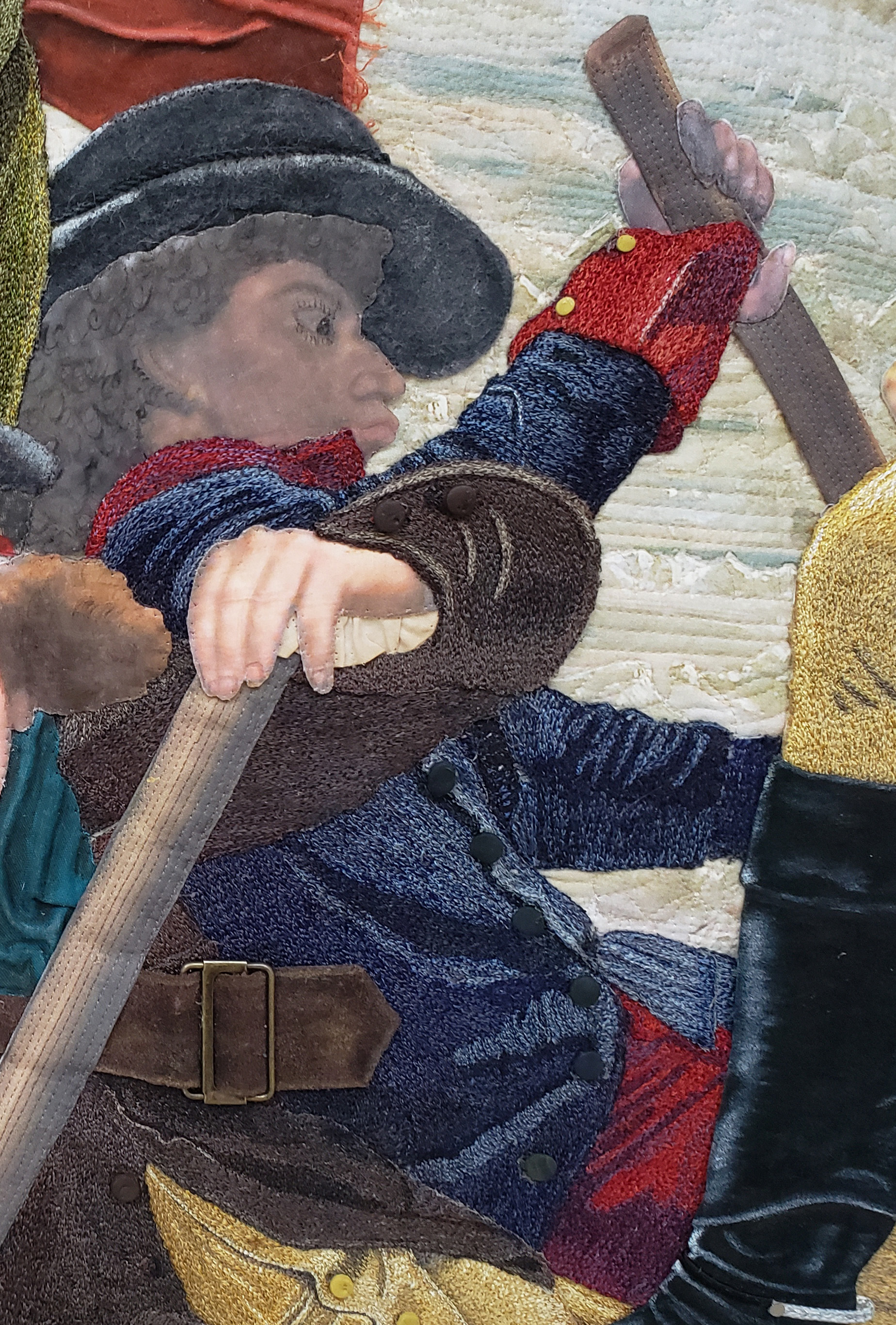 various European backgrounds. While the Continental Army did include diversity across its ranks, this particular boat on that particular night did not.
Leutze wasn’t documenting the crossing — he was illustrating the idea of America. His crew represents the emerging identity of a nation built by many hands and many histories. As a quilter, I loved this symbolic richness. Each figure became a character with a story, even if that story wasn’t historically literal.
The Flag That Wasn’t There (Yet)
The bold Stars and Stripes waving proudly in the painting? Historically impossible. The flag we recognize today wasn’t adopted until 1777 — months after the crossing.
But again, Leutze wasn’t painting a documentary. He was painting a feeling. And nothing says “America” quite like that flag. So yes, it made its way into my quilt too, inaccuracies and all.
The Boat: More Hollywood Than History
The boat in the painting looks sturdy, spacious, and perfectly arranged for dramatic composition. The real Durham boats used during the crossing were narrow, low profile cargo vessels — not exactly ideal for heroic posing.
Leutze widened the boat, added height, and arranged the soldiers like actors on a stage. It’s theatrical, it’s emotional, and it’s visually stunning. And as I worked on the quilt, I found myself appreciating his choices even more. Sometimes art needs a little embellishment to tell a bigger truth.
Why These Inaccuracies Matter — and Why They Inspired Me
Leutze wasn’t trying to deceive anyone. He was trying to inspire them. His painting is less about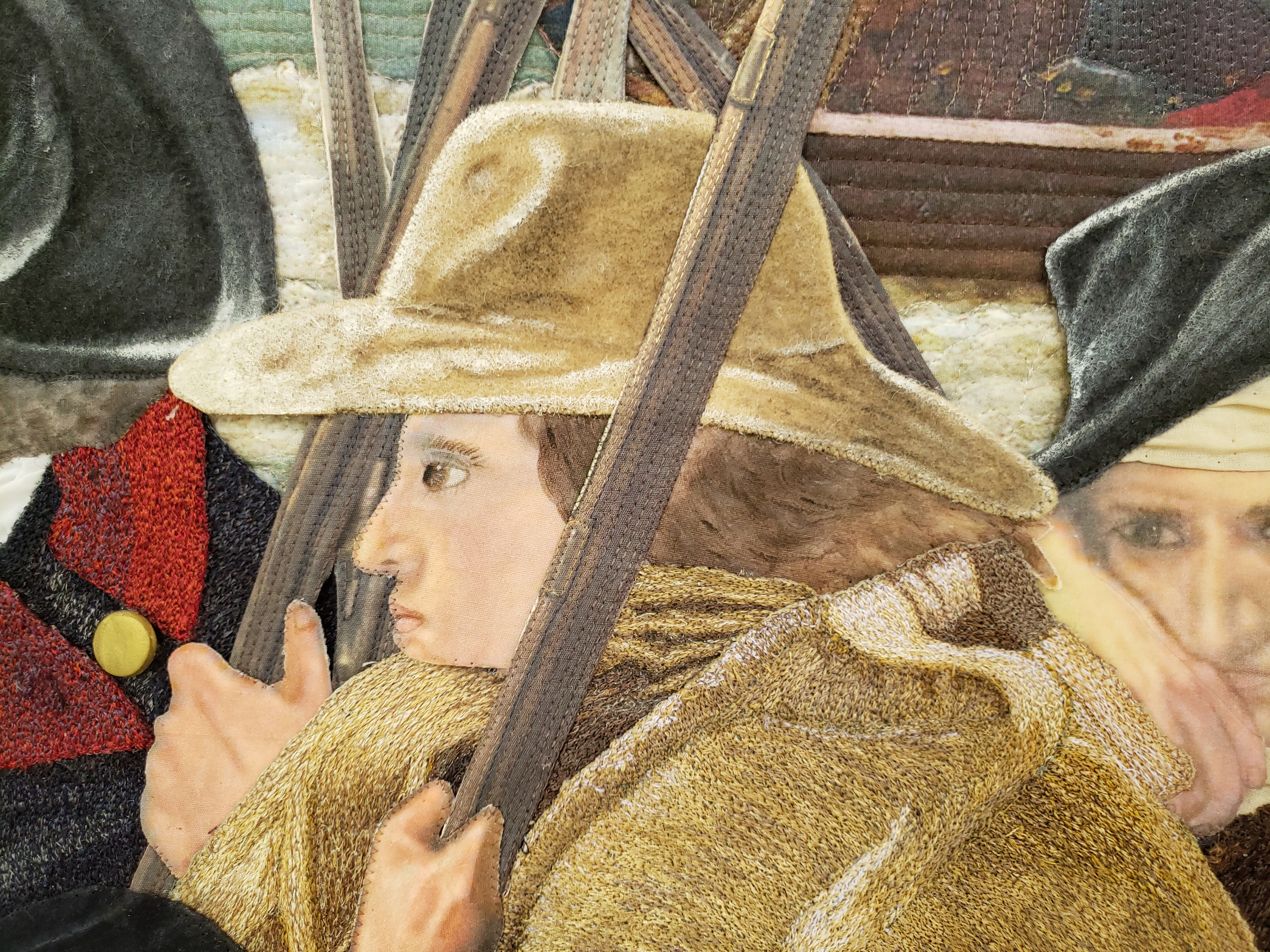 the literal moment and more about the spirit of it — the courage, the determination, the belief that something extraordinary was possible.
And that’s exactly what made it such a compelling quilt project.
As I stitched each figure, painted heads, hands and hats, each icy wave, I wasn’t just recreating a painting. I was stepping into a long tradition of artists who reinterpret history to capture its emotional truth. Leutze used oil paint. I used thread. But we were both telling the same story: the story of a nation fighting for its future.
The Men in the Boat – a Different Slice of Colonial Society
When you look at Leutze’s Washington Crossing the Delaware, the eleven men surrounding Washington aren’t just passengers — they’re a floating portrait of the American colonies themselves. Each figure was intentionally crafted to represent a different slice of colonial society, from farmers and frontiersmen to immigrants and laborers. It’s as if Leutze packed the entire spirit of early America into one ice crusted boat.
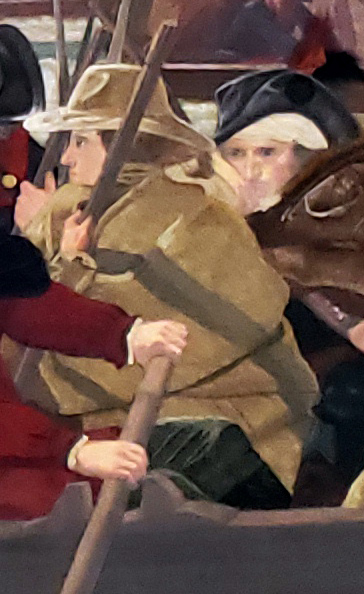 Of course, this symbolic crew is more poetic than literal. Leutze painted the scene 75 years after the actual crossing, long after the real participants were gone and the details had blurred into legend. That distance gave him the freedom to romanticize the moment, shaping it into a visual anthem of courage, unity, and resolve rather than a strict historical record.
Some of the characters — and their clothing, backgrounds, and heroic poses — are historically inaccurate, but that was never the point. Leutze wanted viewers to feel the story: the determination of a young nation, the diversity of its people, and the shared struggle that bound them together. His boat isn’t just crossing a river; it’s carrying the idea of America.
And that blend of symbolism and storytelling is exactly what made recreating these men in thread such a joy. Each figure became a character, a personality, a tiny tribute to the many hands and hearts that shaped the nation’s beginning.
The Battle of Trenton: The Victory That Changed Everything
By the end of December 1776, the Continental Army was hanging on by a thread — cold, hungry, discouraged, and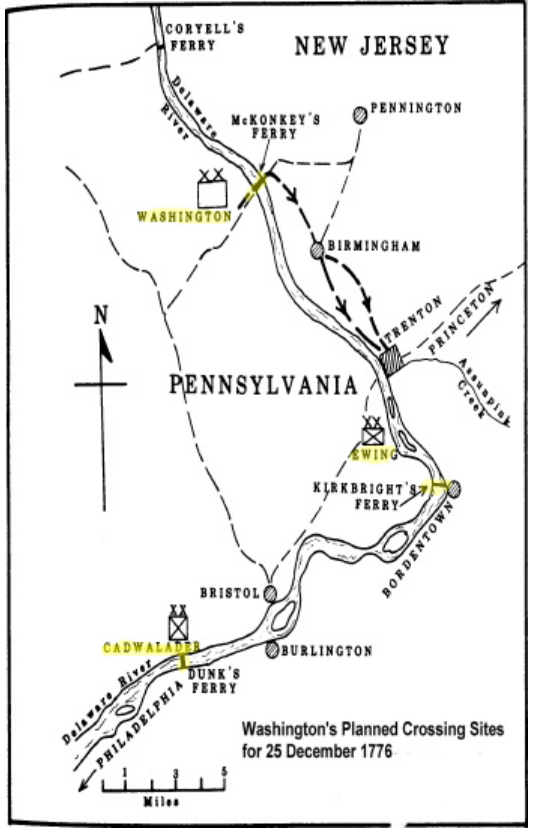 shrinking by the day. Morale was low, enlistments were expiring, and the harsh winter seemed determined to finish what the British had started. But General George Washington, ever the strategist and eternal optimist, believed that the war could still be won. All he needed was one victory — even a small one — to break the cycle of defeat and remind his men (and the entire country) that hope was still alive.
So Washington devised a plan that was equal parts brilliant and borderline impossible: a surprise attack on the Hessian forces stationed in Trenton. The idea? Cross the ice choked Delaware River at night, in the middle of a fierce winter storm, march nine miles through sleet and snow, and catch the Hessians completely off guard the morning after Christmas. Easy, right?
Well… not exactly.
A Plan Nearly Stopped by the Weather
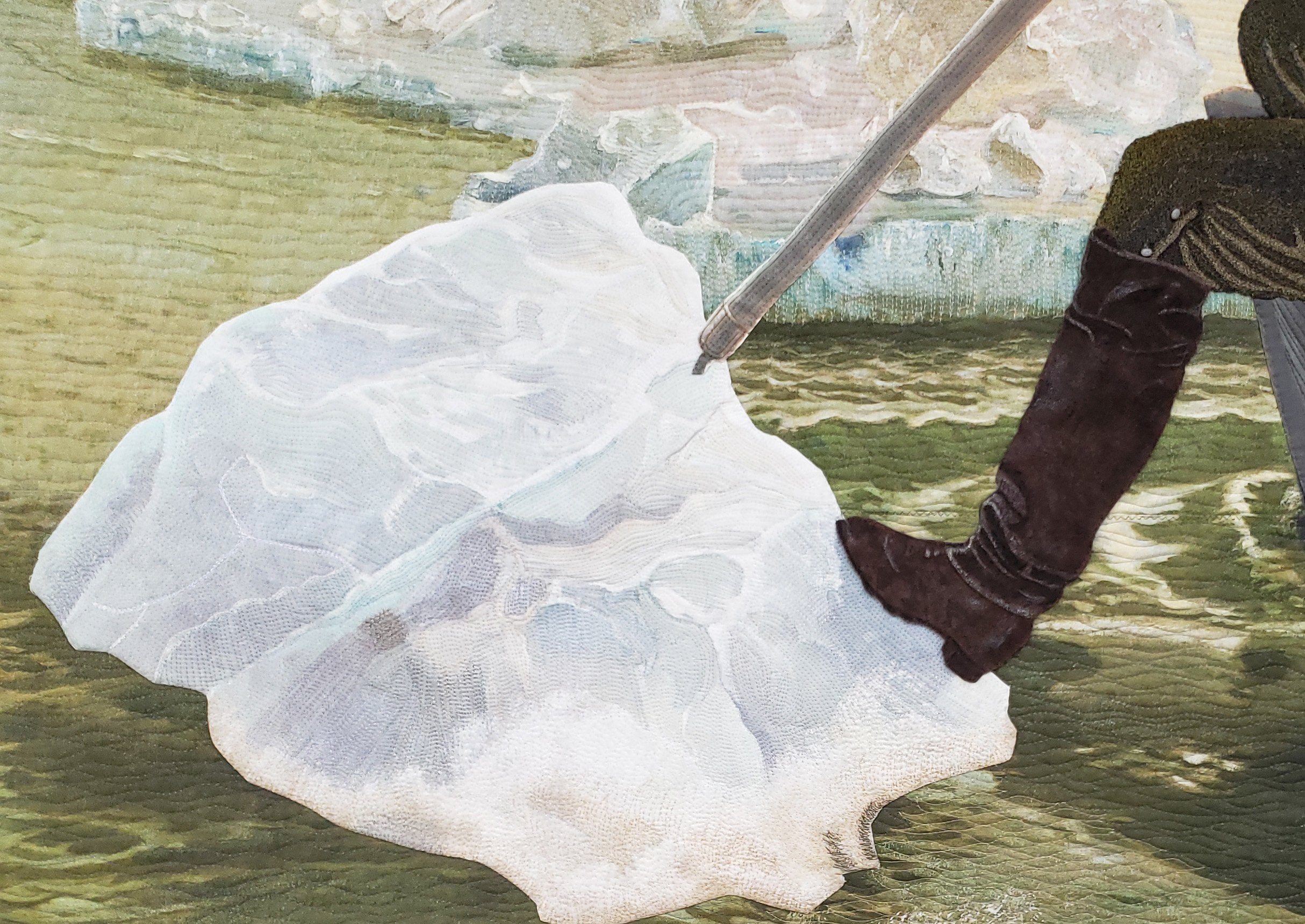 Washington’s strategy involved three separate divisions crossing the river. But the storm was so brutal — with freezing rain, howling winds, and massive chunks of ice slamming against the boats — that only Washington’s own division managed to make it across. The other two were forced to turn back.
Most commanders would have canceled the mission rig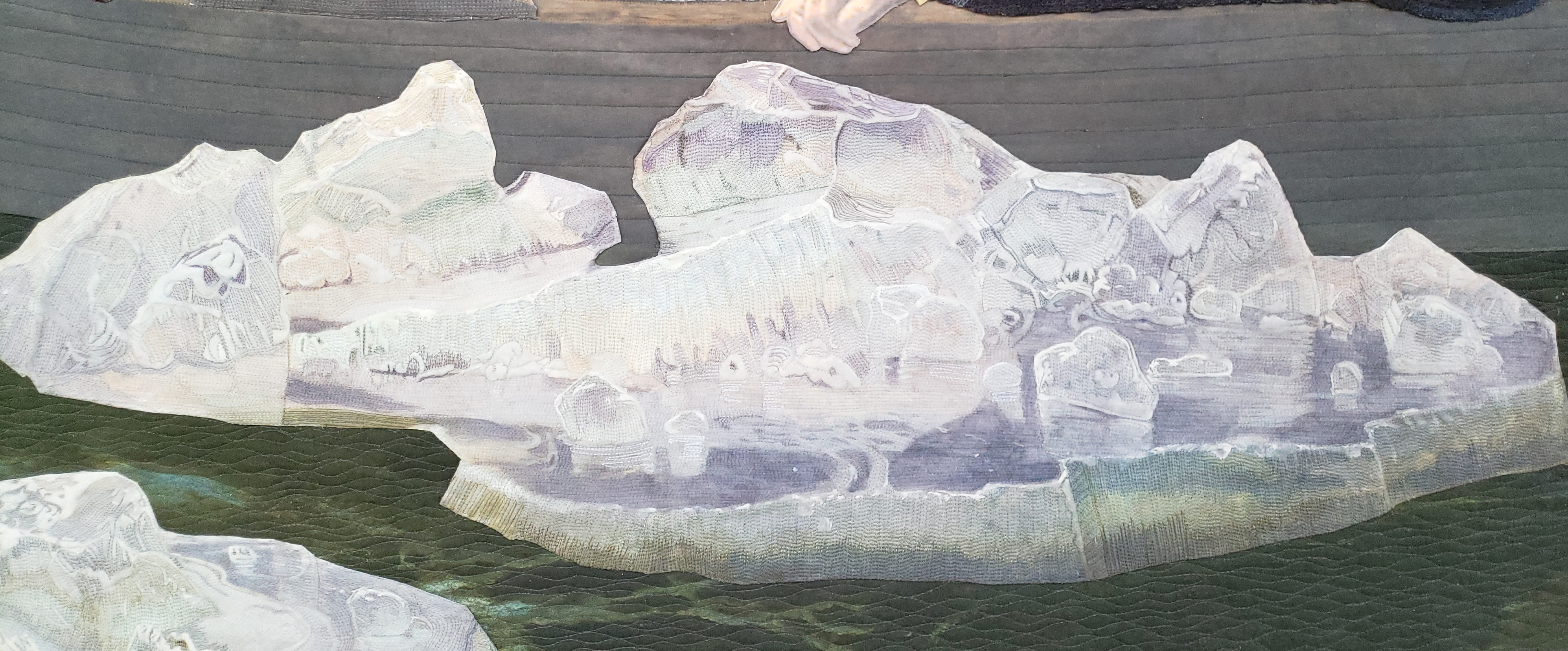 ht then and there. But Washington pressed on. By the time the last of his men reached the New Jersey shore, they were soaked, shivering, and exhausted — and still had a nine mile march ahead of them.
Meanwhile, in Trenton…
The Hessian troops under Colonel Johann Rall were enjoying a well earned Christmas celebration. After months of skirmishes and no sign of immediate danger, they had little reason to expect an attack — especially not in the middle of a winter storm.
Washington was counting on exactly that.
A 45 Minute Battle That Changed the War
 When Washington’s army finally reached Trenton, cold, wet, and running on sheer determination, they launched a surprise attack that lasted just 45 minutes. The Hessians were completely overwhelmed. Rall was mortally wounded, and his troops quickly surrendered.
It was a swift, decisive victory — and exactly the miracle Washington needed.
Hope Restored
The Battle of Trenton wasn’t just a military win. It was a turning point in the American Revolution. Washington had pulled his army out of despair and proven that the fight for independence was far from over. Public support surged. Enlistments increased. And Washington’s men — who had been ready to give up — now believed again.
Against impossible odds, Washington had revived the spirit of the army and the nation. His leadership, courage, and refusal to surrender to circumstance transformed a desperate winter into a moment of triumph.
And that moment — that spark of hope — is the very heartbeat of Washington Crossing the Delaware. It’s what makes the painting so powerful, and what made recreating it in thread such a meaningful journey.
The Making of Washington Crossing the Delaware: When History, Art, and a Quilter’s Curiosity Collide
And So the Quilt Began…
Armed with research, enthusiasm, and just enough naïve optimism to be dangerous, I dove into the project. What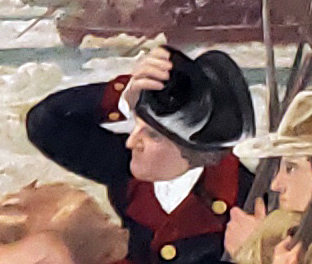 started as “just a little exploration” quickly became a full scale creative journey — one filled with challenges, discoveries, and more than a few moments of “What was I thinking?”
But it also became one of the most rewarding artistic experiences of my life. Translating Leutze’s sweeping, emotional masterpiece into thread and fabric required patience, imagination, and a willingness to embrace the unexpected. Every figure in that boat became a character I got to know intimately. Every stitch carried the weight of history and the joy of creation.
And in the end, the quilt became not just a reproduction, but a tribute — to the painting, to the moment it represents, and to the enduring spirit of artistic adventure.
The Making of Washington Crossing the Delaware
Recreating Emanuel Leutze’s iconic Washington Crossing the Delaware as a quilt began with a single digital image—sourced from the Metropolitan Museum of Art, where the original 12 by 21 foot painting resides. Once I resized it to a “mere” 110" x 65", reality set in. My first thought was simple and honest: I must be out of my mind.
But curiosity won out over fear. After diving into historical research and convincing myself that this adventure was at least theoretically possible, I printed a full size black and white master pattern. That 110" x 65" blueprint became my roadmap for constructing each of the twelve men in the boat.
Breaking Down the Impossible
At first, the scale of Leutze’s figures felt overwhelming. But the only way to recreate a monumental painting—was one stitch at a time. Each figure was broken down into manageable components. George Washington alone had 26 separate clothing pieces. By approaching every garment, fold, and shadow methodically, the impossible slowly became possible. Over four years, all twelve figures were thread painted into existence.
Precision mattered. Even a discrepancy of 1/8" could send someone “overboard”—figuratively, of course. To capture the richness of the original painting, I used more than 400 thread colors and weights, layering shades to create depth, texture, and realism.
Figure by Figure: Triumphs and Trials
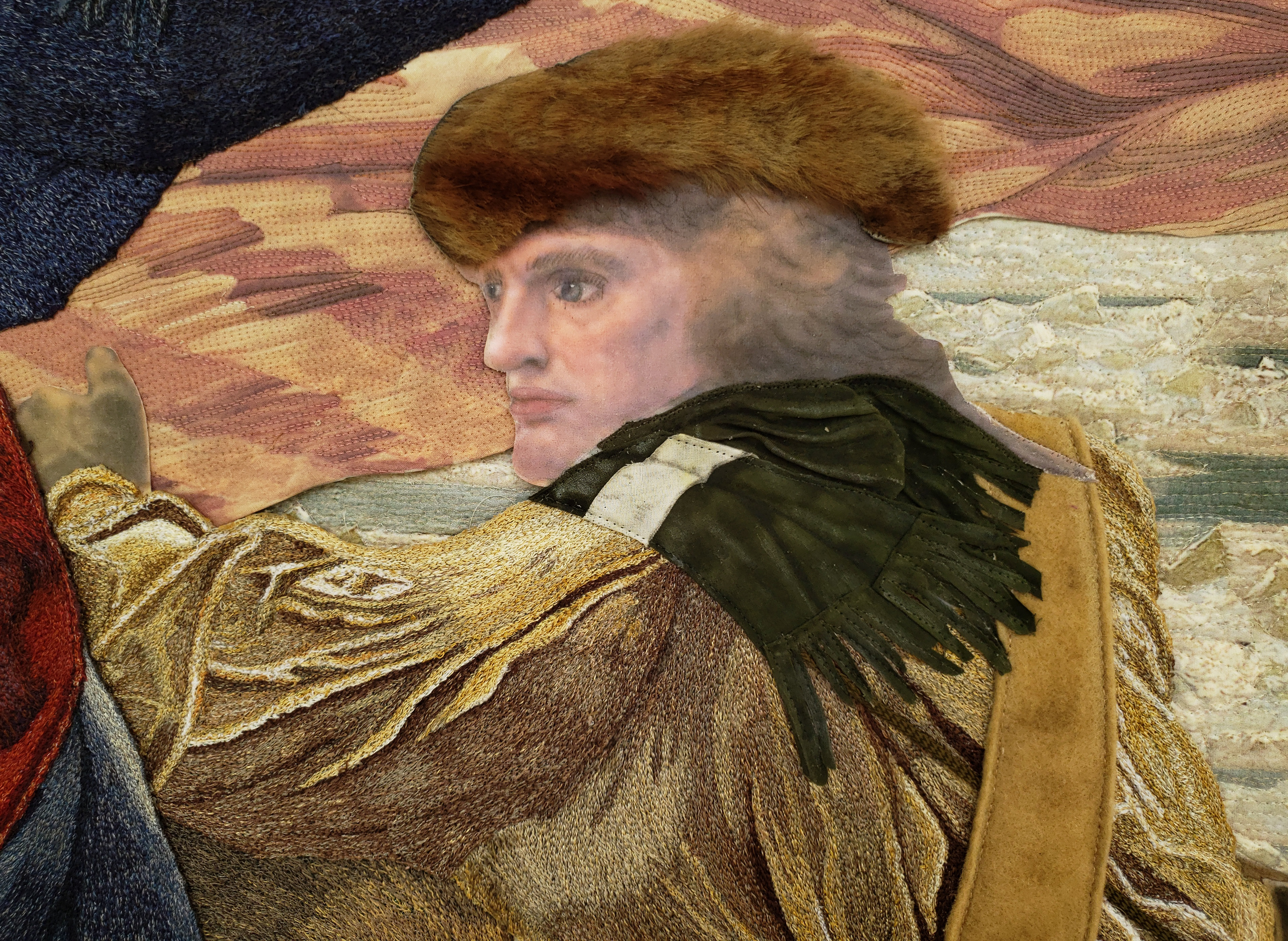
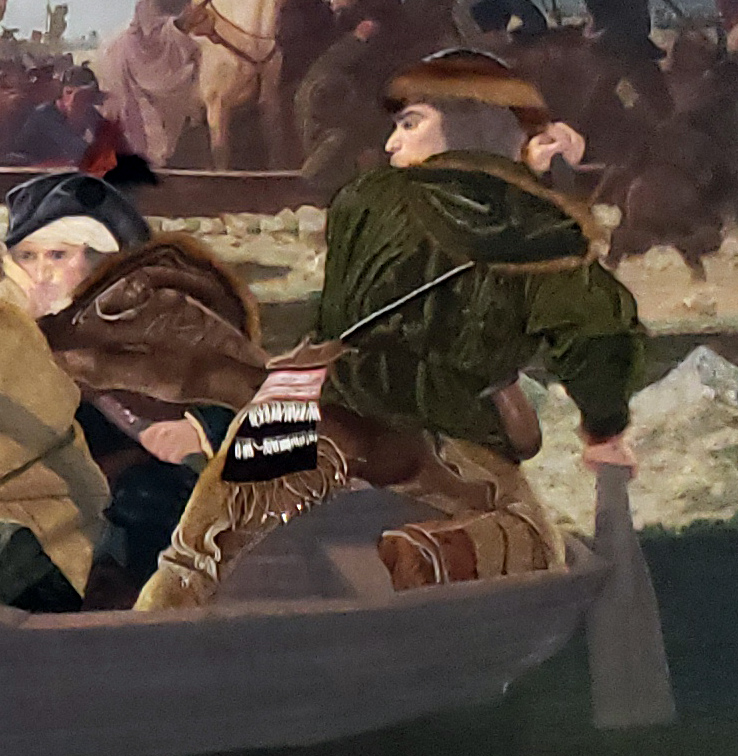 I began with Figure 12—the frontiersman at the back of the boat. He set the tone for the entire project. His clothing alone took over two months to complete, and his decorative bag added another couple of weeks. But his challenges made him one of the most striking figures in the finished quilt.
Then came the biggest challenge of all: George Washington. At 28 inches tall, he is the most prominent figure in the boat. His clothing required over 200 hours of work across six months. Thankfully, his outfit was a kaleidoscope of colors, which kept me from going cross eyed stitching the same shade endlessly.
Each remaining figure brought its own blend of frustrations and small victories. Just completing the thread painting—before adding accessories, details, or embellishments—took two full years.
Materials That Bring History to Life
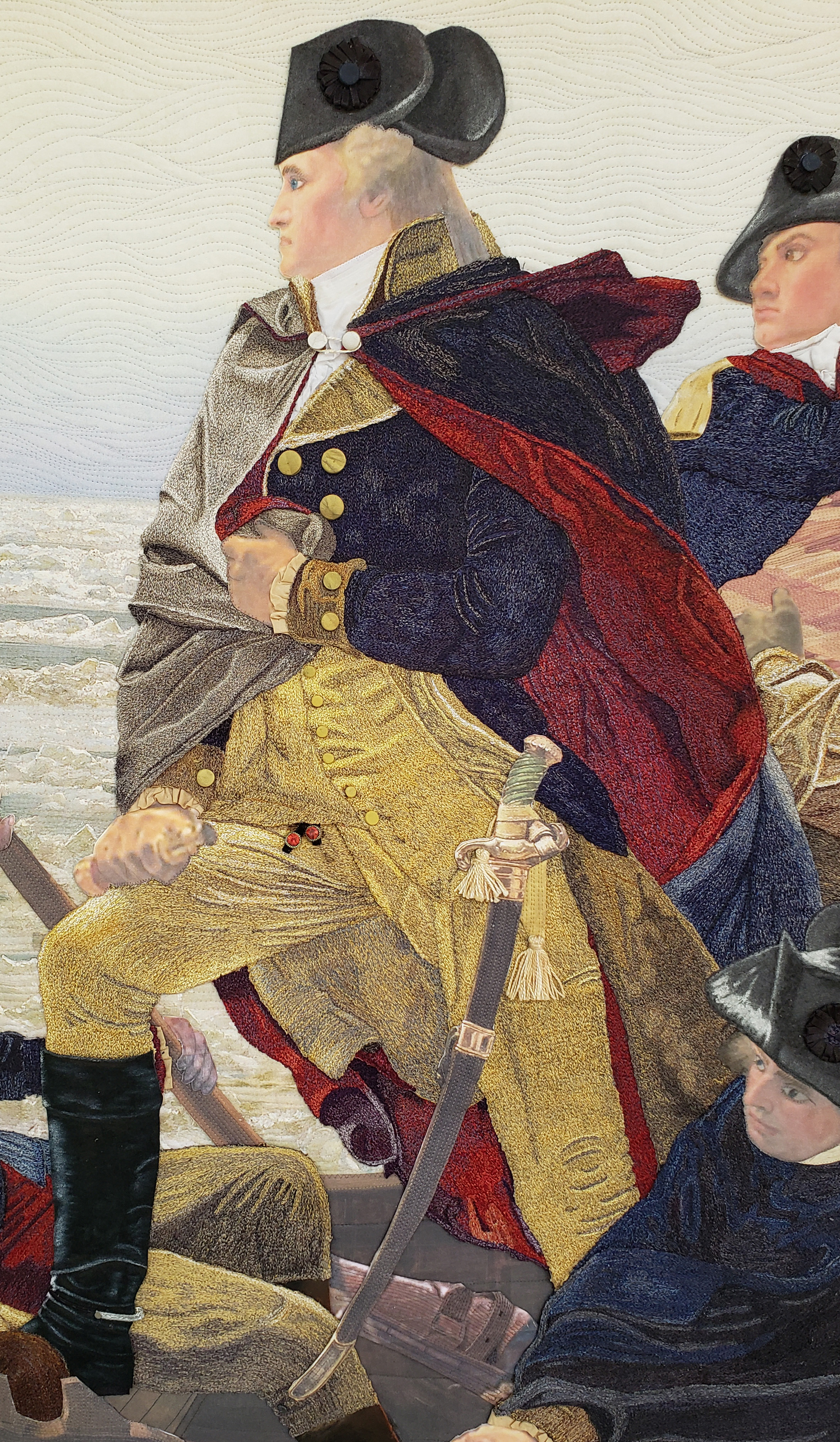
To honor the spirit of the original painting, I used materials that added authenticity and dimension:
- Faces and hands hand-painted with Tsukineko ink
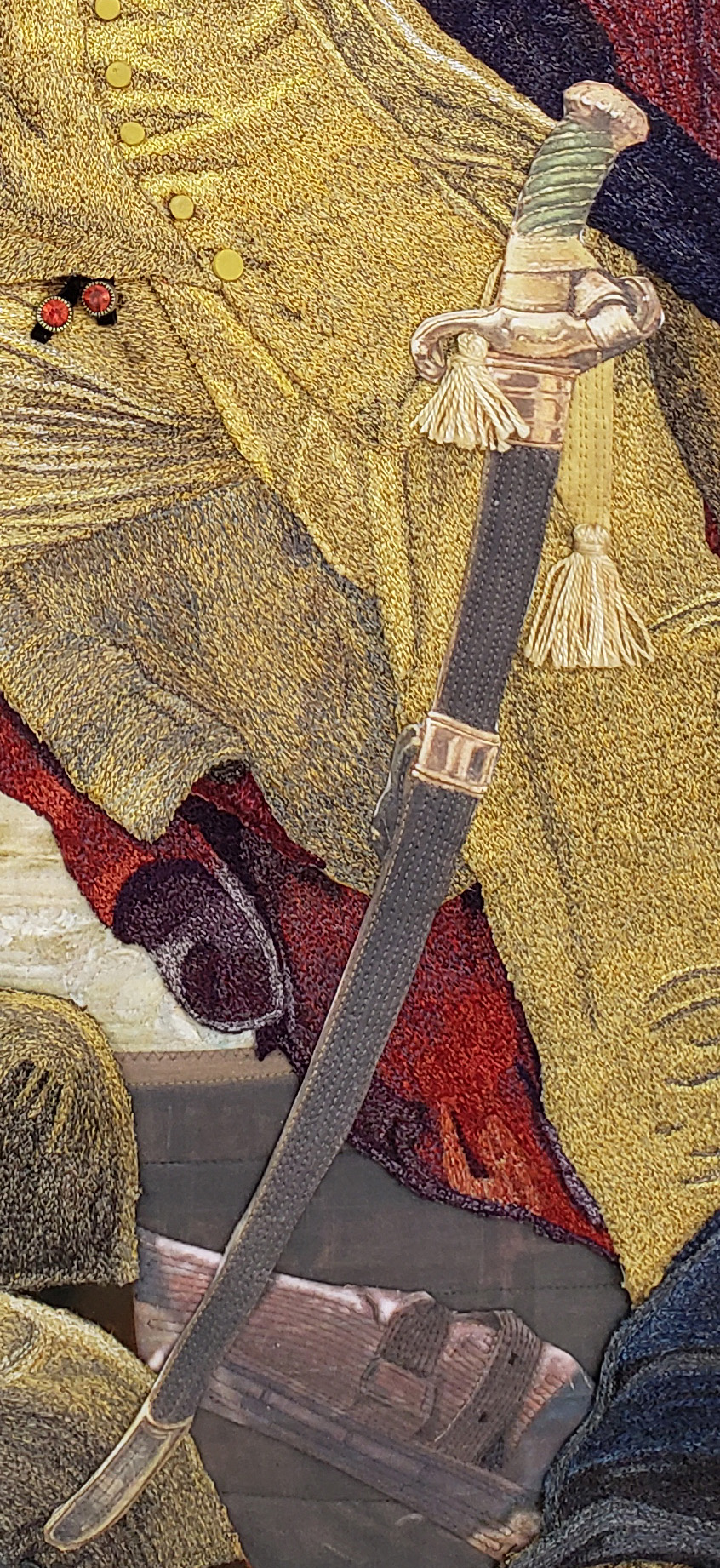
- Buttons sculpted from polymer clay
- Shoes, boots and moccasins crafted from leather or suede and hand painted with Angelus leather paint
- Hats made from wool felt, painted to define their structure
- Cockades fashioned from 1/8" ribbon
- Fur hats created from natural fur
Every accessory required its own research rabbit hole. I spent countless hours figuring out how to recreate or substitute each historical item in a way that felt true to the painting.
Printing, Quilting, and the Sky That Stole the Show
The quilt’s front and back were professionally printed by Little Cocalico, who matched the original painting as closely as possible. Final construction of the quilt took more than 3,000 hours over six years.
The quilting itself was done by Debbie Thornton using 100 weight polyester thread. She changed thread colors constantly to match the shifting tones of the background. Her greatest challenge was the sky, which covers more than a third of the quilt. She designed quilting lines that suggest movement—setting the emotional tone for the entire piece. Debbie spent over 6 weeks quilting the quilt.
A Mini Museum on the Quilt’s Back
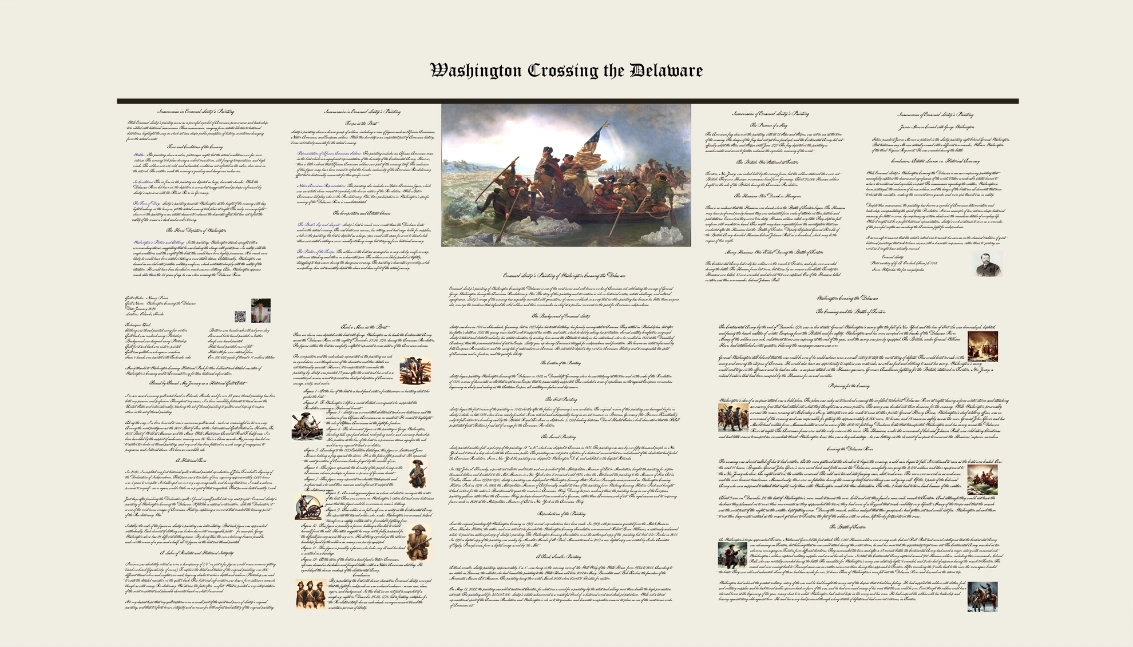
To extend the educational and historical value of the quilt, I created a “mini history” on the quilt back using Photoshop. It includes:T
- The inaccuracies in the original painting
- Profiles of the twelve men in the boat
- A short history of Leutze and his painting
- A summary of the Battle of Trenton
- AI generated color snapshots woven throughout
The result is a visual and historical companion to the quilt itself.
Honoring the Painting—and the Myth
Despite its well known inaccuracies, Leutze’s painting has become a symbol of American determination and leadership. It captures the spirit of the Revolution more than the literal moment. Like many great historical paintings, it aims to leave viewers with a dramatic impression rather than a documentary style record.
My historical notes are based on extensive research, though Revolutionary War accounts often conflict. What I included represents the most consistent and plausible information I found.
A Labor of Reverence
When I recreate a quilt from an iconic painting, my goal is always the same: to honor the original. Every stitch, every thread color, every accessory is chosen with intention. It has been a privilege to reinterpret Washington Crossing the Delaware, and my hope is that this quilt reflects—even in some small way—the honor, integrity, virtue, and reverence embodied in Emanuel Leutze’s masterpiece.
Research Notes:
- Metropolitan Museum of Art – Provided a color digital image of the original painting used as the background on the front of the quilt.
- Washington Crossing Historic Park – Provided valuable information on the crossing which was used to narrate the history on the back of the quilt
- Colonial Williamsburg - Provided information on clothing and accessories of 1776 attire.